Conscious Sedation: the Safe and Innovative Solution for Those Afraid of the Dentist
For many patients, the fear of the dentist is not only related to pain, but to something deeper:the feeling of losing control, the anxiety that suddenly rises, the fear of not being able to handle the session. In these cases, even knowing that “it won’t hurt” is not enough. This is precisely where o
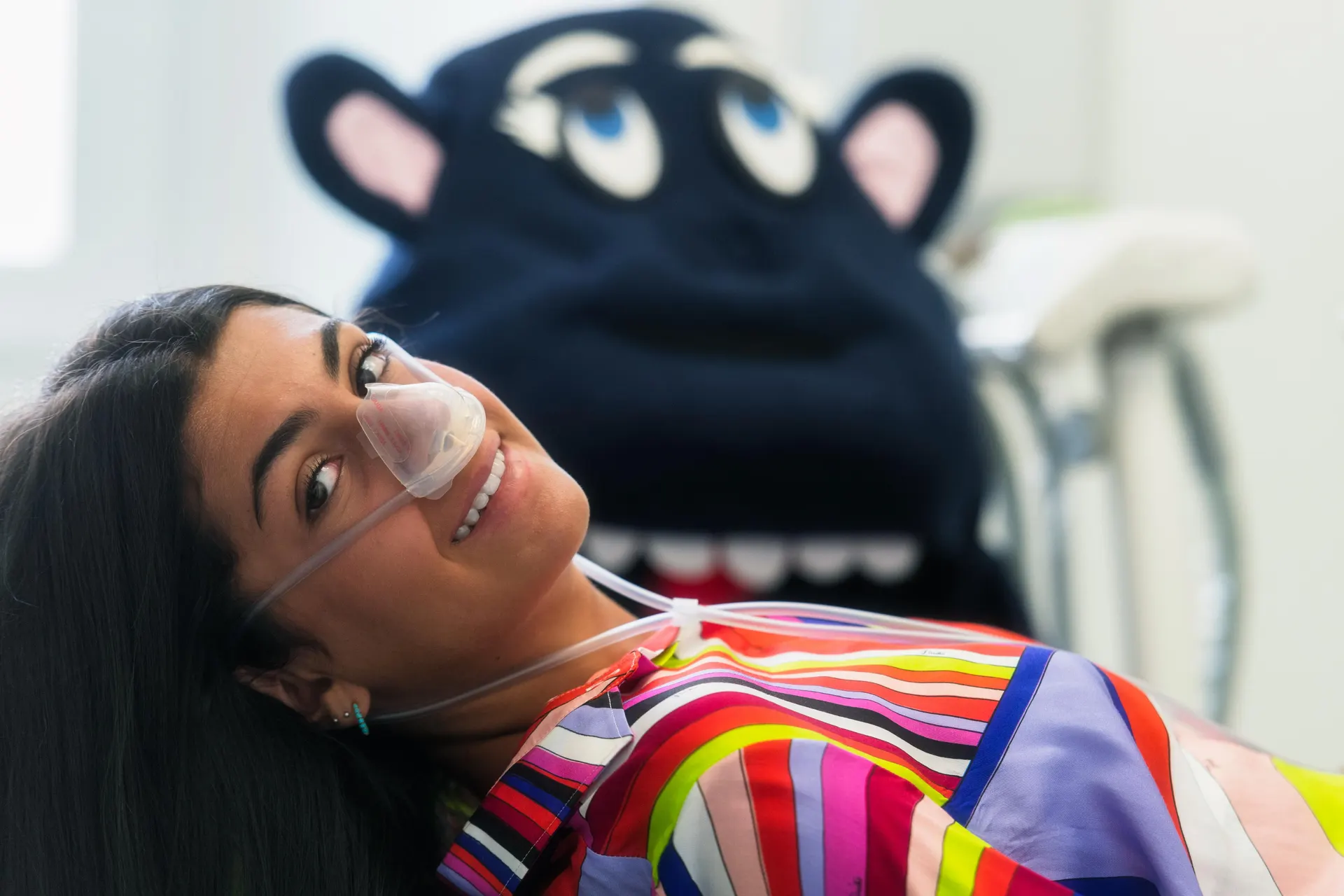
For many patients, the fear of the dentist is not only related to pain, but to something deeper:
the feeling of losing control, the anxiety that suddenly rises, the fear of not being able to handle the session.
In these cases, even knowing that “it won’t hurt” is not enough.
This is precisely where one of the most important innovations in modern dentistry for patient comfort comes into play: conscious sedation.
A safe, controlled and increasingly used solution to allow even the most anxious patients to face treatment with peace of mind.
What is conscious sedation (stated simply)
Conscious sedation is a technique that uses a mixture of oxygen and nitrous oxide, administered through a small nasal mask.
Its main effect is not to “numb,” but to deeply relax the patient, reducing:
-
anxiety
-
voltage
-
intense emotional reactions
During the session the patient:
-
stay awake
-
is conscious
-
can speak
-
responds to stimuli
-
maintains control
This point is crucial for those who are afraid of “not being there anymore.”
Why it is so effective in patients with anxiety or dental phobia
Conscious sedation acts on several levels simultaneously:
▸ Reduces anticipatory anxiety.
Even within the first few minutes, many patients report a feeling of calm and detachment.
▸ Decreased perception of time.
Sessions that seem “very long” are experienced as much shorter.
▸ Mitigates the perception of pain.
The pain threshold increases, making the experience more comfortable.
▸ Reduces physical reactions.
Nausea, tachycardia, muscle tension tend to decrease.
For those who have had traumatic experiences in the past, it often represents the first real positive experience at the dentist.
Do you lose control with conscious sedation?
This is one of the most frequently asked questions.
And it is important to answer it clearly.
No, with conscious sedation you do not lose control.
Patient:
-
hears
-
understands
-
can communicate
-
Can ask to stop at any time
It is not total anesthesia or pharmacological sleep.
Many patients describe the sensation as:
“I was present, but I was no longer afraid.”
Is it a safe technique?
Yes, conscious sedation is considered one of the safest techniques in dentistry when practiced by trained professionals with proper protocols.
Some important aspects:
-
Nitrous oxide is not metabolized by the body
-
the effect is rapid and reversible
-
at the end of the session, the gas is rapidly eliminated
-
the patient becomes alert again within minutes
This is precisely why it has also been used for years in pediatric dentistry and hospital settings.
Who can do conscious sedation?
Conscious sedation is indicated for:
-
patients with dental anxiety
-
patients with dental phobia
-
People with a strong gag reflex
-
Patients who have had negative experiences
-
Those who have difficulty relaxing in the chair
A thorough clinical evaluation is always conducted before proceeding to ensure maximum safety.
For what treatments can it be used?
A common mistake is to think that conscious sedation is reserved only for complex surgeries.
In fact, it can also be used for:
-
first visit
-
oral hygiene
-
fillings
-
devitalizations
-
draws
-
surgeries
For many patients, starting with just a “simple” session under sedation is the best way to rebuild trust.
Conscious sedation and anesthesia: they work together
It is important to make this clear:
conscious sedation does not replace local anesthesia, but complements it.
Anesthesia eliminates pain.
Sedation eliminates fear.
Together they enable:
-
living the session without stress
-
drastically reduce the discomfort
-
improve the overall experience
This combined approach is particularly effective in patients with dental phobia.
What does the patient actually experience during sedation?
The sensations may vary slightly from person to person, but the most common are:
-
deep relaxation
-
sense of lightness
-
emotional detachment
-
reduction of negative thoughts
Many patients report remembering little of the session, while remaining conscious at all times.
After the session, what happens?
One of the great advantages of conscious sedation is rapid recovery.
At the end:
-
the gas is suspended
-
the patient breathes oxygen
-
In a few minutes he becomes fully alert again
In most cases it is possible:
-
stand up independently
-
go home
-
resume normal activities
This makes conscious sedation a practical solution even for those who work or have daily commitments.
Conscious sedation is not a “last resort”
Many patients come to sedation after years of postponement, thinking it is an extreme solution.
It is actually the opposite.
It is an intelligent tool that enables:
-
avoid trauma
-
preventing future blockages
-
transforming the dental experience
For some patients it becomes a temporary support, for others a stable ally.
In either case, the result is to return to care without fear.
A message for those who are thinking “maybe it’s not for me”
If you’re afraid of the dentist, you don’t have to prove anything to anyone.
You don’t have to “resist” or “tough it out.”
There are solutions designed just for you.
Conscious sedation does not take away the patient’s dignity.
It restores it.
An experience beyond daily clinical practice
When it comes to conscious sedation, operator experience is central to patient safety and comfort.
For more than a decade, Dr. Giuseppe Marano has not only been involved in using conscious sedation with nitrous oxide in daily clinical practice, but has also been actively engaged in training other dentists in this method.
He even wrote a book on the subject!
Over the years, he has contributed to the dissemination of correct, safe and patient-friendly protocols by training colleagues on the conscious use of conscious sedation, patient selection and anxiety management in dentistry.
This means that sedation is not understood as a “trick” to make fear go away, but as a serious clinical tool that requires expertise, experience, and deep attention to the person.
For the patient, this all translates into a mature, proven approach centered on real comfort, not improvised.
Read more
Learn more
The Feather Method®
How we work with dental fear: pace agreed with the patient, conscious sedation where appropriate, and the option to stop at any moment.
Go to the pageLooking for a dentist in Rome? Book an Appointment
Dr. Marano personally replies to every message he receives within 24 hours. Fill in the form and he will get back to you shortly.
Articoli Correlati
Stay in touch
One email when we publish something new. No promotions, nothing pointless.