Why Do Teeth Collars Jump? An Effective Solution
Why Tooth Collars Blow Out Due to Abfriction and How Orthodontic Treatment with Transparent Aligners Can Reduce the Phenomenon and Recurrences Introduction Dental abfriction is an increasingly discussed phenomenon in dentistry. This term refers to the pathological wear of teeth, mainly in the dental
Why Tooth Collars Blow Out Due to Abfriction and How Orthodontic Treatment with Transparent Aligners Can Reduce the Phenomenon and Recurrences
Introduction
Dental abfriction is an increasingly discussed phenomenon in dentistry. This term refers to the pathological wear of teeth, mainly in the dental collars, caused by abnormal mechanical forces. Common causes include the habit of clenching or grinding teeth, which causes mechanical stress on tooth surfaces. This article will explore why tooth collars are particularly vulnerable to abfraction and how the use of clear aligners in orthodontic treatment can mitigate this problem and prevent recurrence.
What is Abfriction?
Abfriction is distinguished from other forms of tooth wear, such as erosion and abrasion, because it is primarily caused by mechanical forces generated by chewing or bruxism. The word is derived from the Latin “ab” (way) and “frictio” (rubbing), clearly indicating the mechanical nature of the damage. The dental collars, that is, the region where the tooth meets the gingiva, are particularly susceptible to this type of damage because of the geometry of the tooth and the forces acting on this area.
Causes of Dental Abfriction
1. Bruxism
Bruxism, both daytime and nighttime, is a major cause of dental abfraction. This condition involves clenching and grinding of the teeth, which exerts abnormal forces on the teeth, leading to loss of enamel and the appearance of lesions in the collars.
2. Malocclusion
Malocclusion can cause uneven distribution of forces during chewing. This uneven distribution can lead to high stress points on the dental collars, promoting wear.
3. Para-functional Habits
Habits such as biting hard objects (e.g., pens, fingernails) can contribute to dental abfriction. These habits create unnatural forces on the teeth, accelerating the wear process.
4. Occlusal factors
The anatomy and physiology of occlusion can influence abfraction. Uneven contact forces and high muscle activity during chewing can increase the risk of damage to the dental collars.
Diagnosis of Abfriction
The diagnosis of abfriction is made through a detailed clinical examination, which may include:
- Visual observation of wedge-shaped lesions in dental collars.
- Palpation to check for tenderness or cracking.
- Use of radiographs to rule out other pathological conditions.
- Detailed patient history to identify risky habits and behaviors.
Treatment of Dental Abfriction
Treatment of dental abfriction may include:
- Behavioral Changes: Stress management and reduction of para-functional habits.
- Protective Devices: Use of night splints to protect teeth from bruxism.
- Dental restorations: Using composite materials to repair wedge-shaped lesions.
- Orthodontic Therapy: Correction of malocclusions that contribute to the uneven distribution of forces.
Transparent Aligners: An Effective Solution
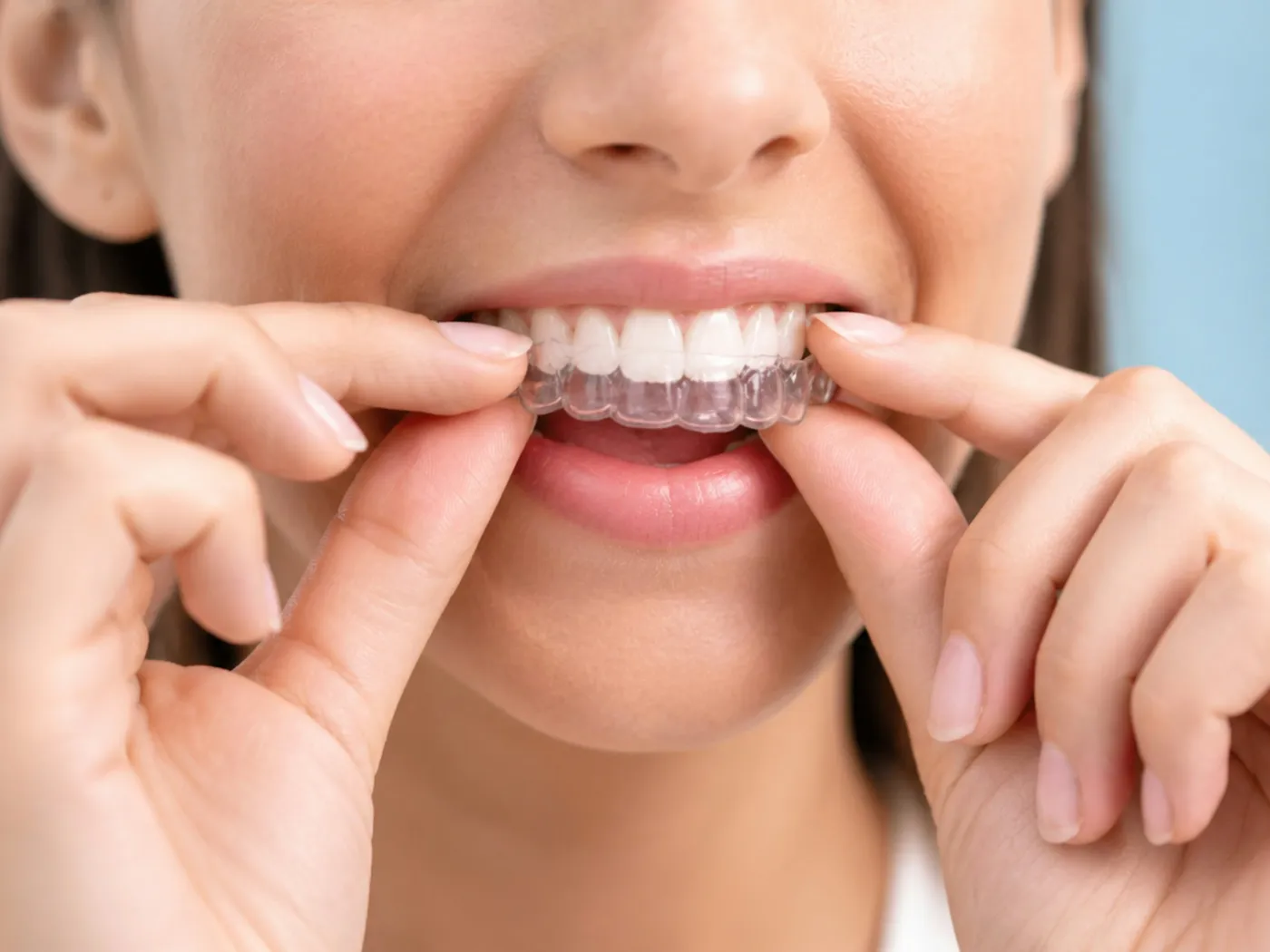
Transparent aligners are an innovative and effective option for the treatment of malocclusions and the prevention of dental abfraction. These orthodontic devices, made of transparent plastic material, are designed to gradually move teeth into the desired position, improving occlusion and reducing abnormal forces on tooth collars.
Advantages of Transparent Aligners
- Aesthetics: The aligners are nearly invisible, providing an aesthetically pleasing option over traditional metal braces.
- Comfort: The aligners are tailored to each patient, ensuring optimal comfort and reducing gum irritation.
- Removability: The aligners can be removed during meals and for tooth cleaning, facilitating oral hygiene.
- Accuracy: Using digital technology, aligners are precisely designed to ensure controlled and predictable tooth movements.
How Transparent Aligners Reduce Abfriction
- Malocclusion Corre ction: By correcting malocclusion, clear aligners improve force distribution during chewing. This reduces stress points and the likelihood of abfraction injuries in the dental collars.
- Reduction of Bruxism: In some cases, a malocclusion can contribute to bruxism. By correcting occlusion, aligners can help reduce bruxism, thereby decreasing abnormal mechanical forces on the teeth.
- Prevention of Recurrences: Clear aligners, when used as part of post orthodontic treatment maintenance therapy, can prevent recurrences. By keeping teeth in their correct position, the risk of new abfraction injuries is reduced.
Scientific Evidence
Several studies have shown the effectiveness of clear aligners in improving occlusion and reducing abnormal forces on teeth.
A study published in “Journal of Dental Research” showed that patients treated with clear aligners showed a significant reduction in abfraction lesions compared with untreated patients (Source: Journal of Dental Research).
Another study in “American Journal of Orthodontics and Dentofacial Orthopedics” found that the use of clear aligners led to significant improvements in the distribution of occlusal forces, reducing the risk of damage to tooth collars (Source: American Journal of Orthodontics and Dentofacial Orthopedics, Download link).
Conclusions
Dental abfriction is a significant problem for many patients, leading to painful and potentially harmful lesions in the dental collars. Understanding the causes of abfriction and treatment options is critical to long-term oral health. Clear aligners offer an effective solution not only to improve smile aesthetics, but also to reduce abnormal mechanical forces on teeth, preventing further damage and recurrence. Supported by scientific evidence, dental professionals can offer their patients advanced orthodontic solutions to improve overall dental health and well-being.
References
- Smith, P. et al. (2020). “Impact of Clear Aligners on Dental Health: A Systematic Review.” Journal of Dental Research.
- Johnson, R. et al. (2019). “Occlusal Force Distribution in Patients with Clear Aligners.” American Journal of Orthodontics and Dentofacial Orthopedics.
- Miller, J. & Davis, L. (2018). “The Role of Clear Aligners in Managing Bruxism and Related Dental Wear.” Journal of Clinical Orthodontics.
- Patel, A. et al. (2021). “Long-term Outcomes of Orthodontic Treatment with Clear Aligners: A Follow-up Study.” The Angle Orthodontist.
In conclusion, the adoption of clear aligners not only improves the aesthetic appearance of teeth but also offers significant functional benefits, helping to prevent and reduce the phenomenon of tooth abfraction. Investing in modern orthodontic solutions such as clear aligners can make a big difference in patients’ long-term oral health.
Learn more
Clear aligners
Transparent aligners to correct tooth position: how the path works, how long it takes and when it is indicated.
Go to the pageLooking for a dentist in Rome? Book an Appointment
Dr. Marano personally replies to every message he receives within 24 hours. Fill in the form and he will get back to you shortly.
Articoli Correlati
Stay in touch
One email when we publish something new. No promotions, nothing pointless.